


Kratom Nutrition Facts: What You Need to Know
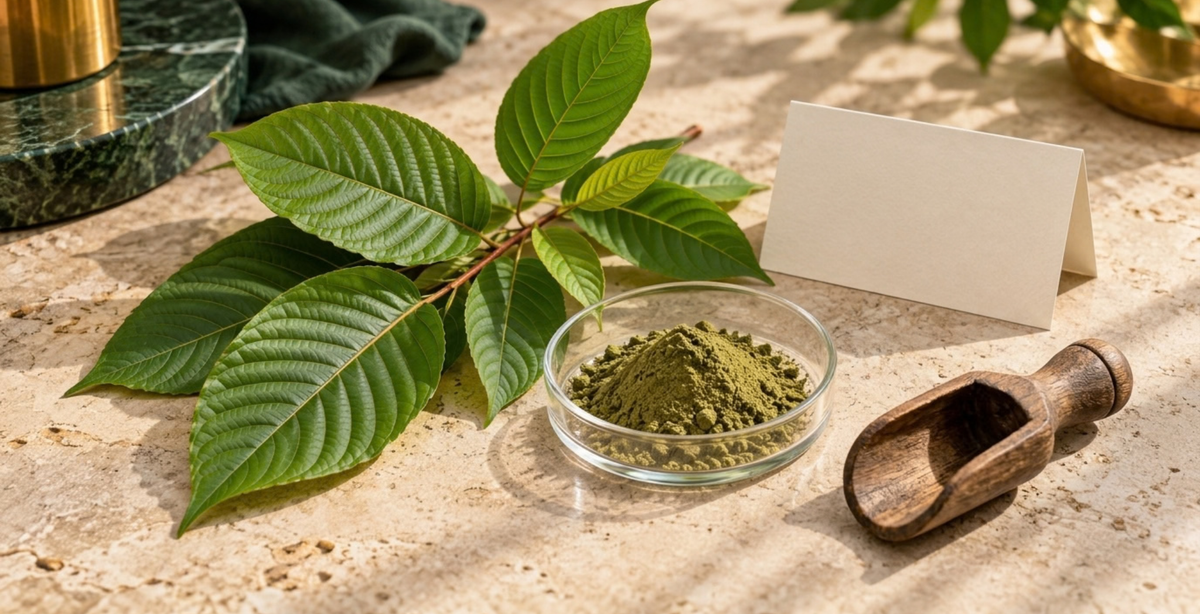
Kratom is a tropical evergreen tree native to Southeast Asia, including Thailand, Indonesia, and Malaysia. Its leaves contain natural plant compounds, trace minerals, and active alkaloids.
The nutritional composition varies depending on growing conditions, leaf maturity, harvesting, and processing. Understanding these components provides a clearer picture of kratom’s nutritional content and botanical properties.
What Is in Kratom?
 To understand kratom nutrition, you first have to look at the basic anatomy of the leaf. Like green tea, matcha, or spinach, raw kratom leaf powder is composed of cellular plant tissue.
When you break down the composition of raw kratom leaf material, it contains several primary elements:
-
Plant-based nutrients: The bulk of dried leaf powder is plant matter made of cellulose, carbohydrates, and small traces of amino acids.
-
Dietary fiber: Because whole leaves are dried and crushed, the final powder is rich in insoluble plant fiber.
-
Minerals: The roots of the kratom tree absorb minerals from the surrounding tropical soil, carrying them directly into the foliage.
-
Naturally occurring alkaloids: These are organic nitrogen-based compounds manufactured naturally by the plant.
-
Key active alkaloids: Mitragynine and 7-hydroxymitragynine represent the primary alkaloids that give the plant its characteristic botanical profile.
While whole-leaf kratom does contain classic food components like carbohydrates and fiber, kratom should never be considered a replacement for a healthy, balanced diet. It is consumed in small amounts as a botanical product, not as a core food source.
Kratom Nutrition Facts: Calories and Nutrients
 Because kratom is typically marketed as an herbal supplement rather than an everyday food product, standard nutritional labels are not always displayed on packages. However, nutritional analyses of dried kratom leaf powder reveal a makeup very similar to other dried tree foliage and ground tea leaves.
Calories
Kratom powder has a very low energy density. A standard serving of plain dried leaf powder (approximately 2 grams) contains roughly 7 to 8 calories. Even a slightly larger serving of 5 grams provides only around 18 to 20 calories. Most of these calories come from the complex plant carbohydrates that make up the cell walls.
Carbohydrates and Fiber
Carbohydrates form the largest macronutrient fraction in dried leaf powder, accounting for roughly 60% to 70% of its dry weight. However, the majority of these carbohydrates consist of insoluble dietary fiber. In a 2 gram serving of powder, you get approximately 1.2 to 1.5 grams of fiber. Because the human digestive tract cannot break down insoluble cellulose fibers, the net absorbable carbohydrates are extremely low.
Protein
Plant leaves contain structural proteins and enzymes. Dried kratom leaf contains a modest amount of crude protein, generally falling between 7% and 12% of total weight. In a typical 2 gram serving, this equals less than 0.25 grams of protein, which makes its contribution to your daily dietary protein intake negligible.
Fat
Kratom is naturally very low in fats and lipids. Dried foliage contains only trace lipid fractions (under 2% by weight). A single serving contains virtually zero grams of fat, with negligible saturated and unsaturated fats.
Minerals
As the tree grows in mineral-rich tropical soils, it accumulates trace inorganic elements. Lab tests of dried Mitragyna speciosa foliage consistently find small quantities of essential minerals:
-
Iron: Present in modest trace amounts from natural soil uptake.
-
Calcium: A natural component of plant cell structures.
-
Potassium: Commonly found in leaf tissue fluids.
-
Magnesium: Located in the chlorophyll molecules that make the leaves green.
Why Nutritional Values Can Vary Between Products
No two batches of kratom share the exact same nutritional figures. Several natural variables alter these metrics:
-
Leaf maturity: Older leaves develop thicker cell walls, which increases their fiber content while shifting mineral concentrations.
-
Drying techniques: Indoor drying, outdoor sun-curing, or fermentation change the residual moisture levels and alter the final nutrient density.
-
Grind consistency: Micro-pulverized leaf flour creates a denser volume per scoop than coarsely crushed leaf, altering the weight-to-serving ratio.
-
Extracts vs. powders: Traditional leaf powders preserve all natural fibers and minerals. Concentrated extracts remove nearly all plant fiber, leaving mostly isolated alkaloids.
Understanding Kratom's Natural Compounds
 While the basic calories and fiber tell you what the plant looks like as a food material, they are not the reason people take interest in kratom. What sets Mitragyna speciosa apart from common leafy greens is its rich library of secondary plant metabolites known as alkaloids.
Mitragynine
Mitragynine is by far the most abundant active alkaloid found in the plant. In standard dried leaf products, mitragynine typically makes up roughly 60% of the total alkaloid content, which translates to roughly 1% to 2% of the dried leaf's total weight.
7-Hydroxymitragynine
Though present in much smaller quantities, 7-hydroxymitragynine is an exceptionally potent compound. In fresh, unadulterated leaves, it rarely exceeds 0.05% of the total dry weight. In many high-quality cured powders, it exists only in microscopic trace amounts.
Other Naturally Occurring Alkaloids
Beyond the top two, researchers have identified more than 40 different secondary alkaloids in kratom foliage. These include:
-
Paynantheine: Often the second most abundant alkaloid in raw leaf matter.
-
Speciogynine: A structural isomer that contributes significantly to the natural plant matrix.
-
Speciociliatine: A minor compound studied for its distinct binding affinity.
-
Mitraphylline: An oxindole alkaloid also found in other tropical medicinal plants like Cat's Claw (Uncaria tomentosa).
Factors Influencing Alkaloid Levels
The balance of these phytochemicals shifts throughout the life of the tree:
-
Geography and Climate: Soil acidity, seasonal rainfall, temperature, and sun exposure determine how many secondary metabolites the tree produces to defend itself.
-
Harvest Timing: The time of day and the season of harvest influence the concentration of active compounds.
-
Post-Harvest Handling: Exposure to light and moisture can cause certain compounds to degrade or oxidize into secondary forms.
What Should You Know About Kratom's Nutritional Profile?
 Navigating kratom products requires a clear view of how nutritional content relates to product safety and quality.
Powder vs. Extracts
Whole-leaf powder maintains the natural botanical structure of the leaf, delivering all the native fiber, minerals, and natural alkaloid ratios. Liquid extracts and solid resin concentrates, by contrast, strip out the plant fiber and calories to pack high concentrations of alkaloids into a tiny serving. Looking at an extract's label for calories is largely irrelevant; what matters is the concentrated alkaloid milligram count.
Evaluating Product Labels and Quality
When shopping for kratom, always read labels carefully:
-
Ingredient transparency: High-grade products clearly state whether you are buying 100% pure Mitragyna speciosa leaf or an enhanced blend.
-
Third-party testing: Responsible vendors provide certificates of analysis showing that products are screened for heavy metals, molds, salmonella, and artificial adulterants.
-
Serving guidance: Look for distinct guidance on serving weight in grams rather than subjective measurements like spoonfuls.
Conclusion
Kratom contains natural plant compounds, including fiber, trace minerals, and alkaloids such as mitragynine. Its composition varies by product and processing method. Although kratom has some nutritional components, it is not a substitute for a balanced diet, and its potential risks should be considered before use.
Frequently Asked Questions
Q1 Is kratom good for your brain?
Kratom affects the central nervous system and may influence mood and alertness. However, evidence of long-term cognitive benefits is limited, and regular use can lead to dependence.
Q2 How much 7-hydroxymitragynine is in 1 gram of kratom?
Natural kratom leaf typically contains very small amounts of 7-hydroxymitragynine, but levels vary by product and testing method.
Q3 Does kratom contain vitamins or minerals?
Kratom contains trace amounts of minerals such as calcium, iron, and potassium, but it is not a reliable source of essential vitamins.
Q4 How many calories are in kratom powder?
The calorie content is low and varies with the serving size. Kratom powder also contains plant fiber.
Q5 Does kratom powder have nutritional value?
Kratom contains fiber and small amounts of other plant nutrients, but it contributes little to daily nutritional needs and is not considered a nutritional food.
Read more

Kratom is a herbal substance made from the leaves of Mitragyna speciosa, a tropical tree native to Southeast Asia. It is commonly available as powder, capsules, or liquid extracts and is known for ...

Kava shots are compact, ready-to-drink beverages made from the root of the kava plant, native to the Pacific Islands. While traditional kava involves preparing ground root with water, these bottled...
