


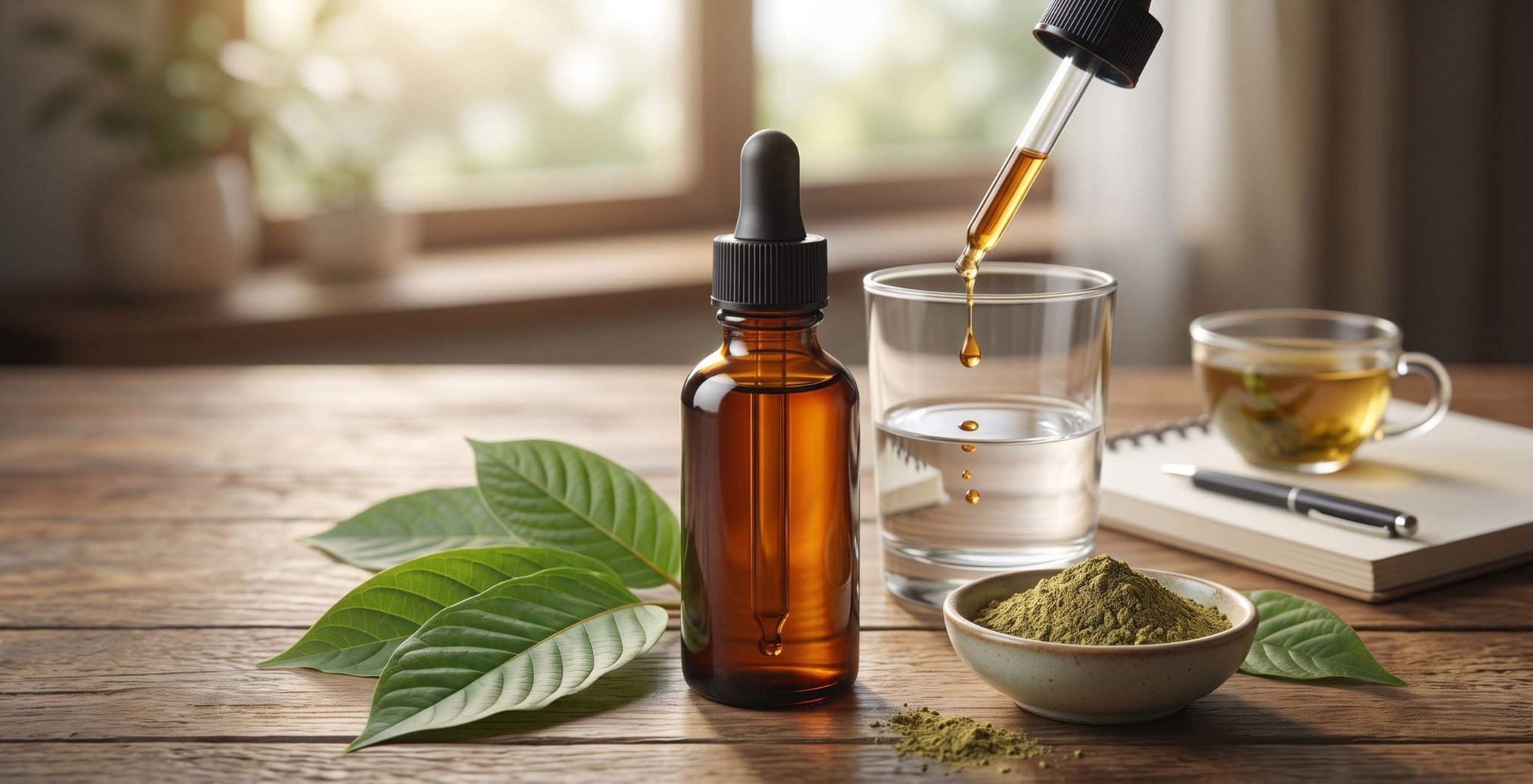
How Does Kratom Liquid Work? Effects and Safety
Kratom liquid is a liquid-based product made from kratom leaves or extracts. It is available in different forms, including liquid extracts, tinctures, teas, and ready-to-use shots.
The strength, ingredients, and concentration of kratom liquid can vary between products and brands. These differences can affect how each product interacts with the body and the type of experience it may provide.
Understanding the composition, effects, and important considerations related to kratom liquid can help users make more informed decisions before choosing a product.
What Is Kratom Liquid?
 To understand this product, we must first answer a basic question: what is kratom liquid? In simple language, it is a liquid product containing compounds derived from kratom leaves. Instead of swallowing raw powder or tossing back crushed leaves, users consume a liquid fluid that contains the active components of the plant.
Kratom liquid comes in several common forms:
-
Kratom Tea: A traditional method where leaves are steeped in hot water.
-
Tinctures: Liquid solutions typically made by soaking kratom in alcohol or water to extract the active components.
-
Concentrated Liquid Kratom Extract: A highly potent form where the active chemicals are stripped from the plant material, resulting in a strong liquid base.
-
Bottled Liquid Shots: Small, single-serving bottles often sold in convenience stores that contain concentrated extracts, frequently flavored to mask the bitter taste of the plant.
The properties of these liquids rely entirely on kratom alkaloids, which are the naturally occurring chemical compounds within the plant. The two primary alkaloids responsible for the plant's activity are mitragynine and 7-hydroxymitragynine, often abbreviated as 7-OH.
Mitragynine is the main alkaloid found in kratom leaves, while 7-hydroxymitragynine occurs naturally in much smaller amounts. However, some concentrated products may contain higher levels of 7-OH due to processing, making them significantly stronger than traditional kratom leaf products.
How Does Kratom Liquid Work in the Body?
 When someone consumes kratom liquid, the active compounds are absorbed through the digestive system and enter the bloodstream. These compounds then interact with receptors and chemical systems in the brain and nervous system, influencing how signals are transmitted.
The main alkaloids in kratom, mitragynine and 7-hydroxymitragynine (7-OH), interact with mu-opioid receptors, which are also affected by opioid substances. This interaction may contribute to effects such as relaxation, sedation, and other opioid-like responses. Kratom compounds may also influence other systems involving serotonin, dopamine, and norepinephrine.
Key Points:
- Interaction with Brain Receptors: Kratom’s active compounds affect different receptors in the brain, including opioid receptors, which influence mood, sensation, and relaxation.
- Different Effects at Different Levels: Depending on the product strength and amount consumed, kratom may produce stimulant-like effects or more calming, opioid-like effects.
- Impact on Brain Signals: Kratom changes how certain chemical signals are processed in the nervous system, which can influence the overall experience.
- Research Is Still Developing: Scientific understanding of kratom is still limited, and more research is needed to fully understand its long-term effects and interactions with the body.
What Effects Can Kratom Liquid Produce?
 Because of how it interacts with the nervous system, the liquid kratom effects can be wide-ranging. It is important to discuss these different effects associated with kratom without presenting them as guaranteed benefits or medical treatments.
Some people report experiencing stimulant effects of kratom. These typically present as:
-
Increased alertness
-
A surge of physical energy
-
Heightened sociability
-
Restlessness or jitteriness
While some seek out these feelings, users must also contend with a long list of kratom side effects. Unwanted and uncomfortable reactions are common, especially with concentrated liquids. These include nausea or vomiting, dizziness, constipation, excessive sweating, confusion, extreme drowsiness, and noticeable changes in heart rate or blood pressure.
Beyond these mild to moderate issues, serious liquid kratom risks exist. Medical literature and emergency room data show that serious adverse events have been reported. These severe outcomes include seizures, liver toxicity, respiratory depression, and the development of a substance use disorder. Individual experiences can vary significantly, meaning a dose that causes mild energy in one person might cause severe nausea or scary heart palpitations in another.
Why Do Kratom Liquid Effects Vary?

A common source of confusion for consumers is why kratom liquid may not affect every person or product user in the same way. The reality is that the experience is highly unpredictable due to a variety of overlapping factors.
First, consider the product itself. The overall kratom liquid strength depends heavily on the alkaloid concentration, specifically the exact mitragynine and 7-OH content. Extraction and manufacturing methods play a massive role here. A cold-water extraction will yield a very different chemical balance than an alcohol-based chemical extraction. Furthermore, product quality and labeling accuracy are notoriously inconsistent in this unregulated market; what the label claims may not match what is inside the bottle.
Second, the physical size of a bottle does not indicators its concentration. A tiny, one-ounce liquid shot may contain a highly concentrated extract equivalent to many grams of raw powder, while a large fourteen-ounce beverage might contain a much weaker, diluted tea.
Finally, individual human biology changes the outcome. Factors affecting kratom effects include:
-
Individual metabolism and liver enzyme function
-
Previous kratom exposure
-
Built-up kratom tolerance
-
General health status
-
Concomitant use of medications or other substances
Because of all these moving parts, the intensity and duration of the experience fluctuate wildly. How long kratom liquid lasts depends entirely on these variables, meaning it is impossible to promise a fixed onset time or a guaranteed duration of effects.
Conclusion
Kratom liquid comes in different forms and strengths, which can lead to varying effects for each person. Factors like product composition, individual tolerance, and usage patterns can influence the experience. Understanding these factors helps in making informed decisions about kratom products.
Frequently Asked Questions
Q1 What drugs should not be taken with kratom?
Kratom should not be combined with substances like opioids, sedatives, alcohol, stimulants, or certain medications, as combinations may increase safety risks and unwanted effects.
Q2 Does kratom have opioid-like effects?
Yes, kratom contains active compounds that interact with opioid receptors in the brain, which may cause effects such as relaxation, drowsiness, and sedation.
Q3 Is kratom safe to use daily?
Regular daily use may increase the risk of tolerance, dependence, and withdrawal symptoms. Usage patterns can vary depending on the individual and product strength.
Q4 How long do the effects of kratom liquid last?
The duration can vary based on product concentration, dosage, metabolism, and other factors. Effects may differ significantly between individuals.
Q5 Can kratom liquid cause dependence or withdrawal?
Yes, frequent use of kratom liquid may lead to dependence. Stopping regular use can result in withdrawal symptoms such as irritability, anxiety, sleep issues, and discomfort.
Read more
Taking your vitamins shouldn't feel like a waiting game. Every day, millions of people swallow hard pills, capsules, and chalky powders hoping to boost their energy, immunity, and longevity but few...
Kratom is a botanical product derived from the leaves of Mitragyna speciosa, a tropical tree native to Southeast Asia. Historically used in local traditional practices, the plant has expanded into ...
