


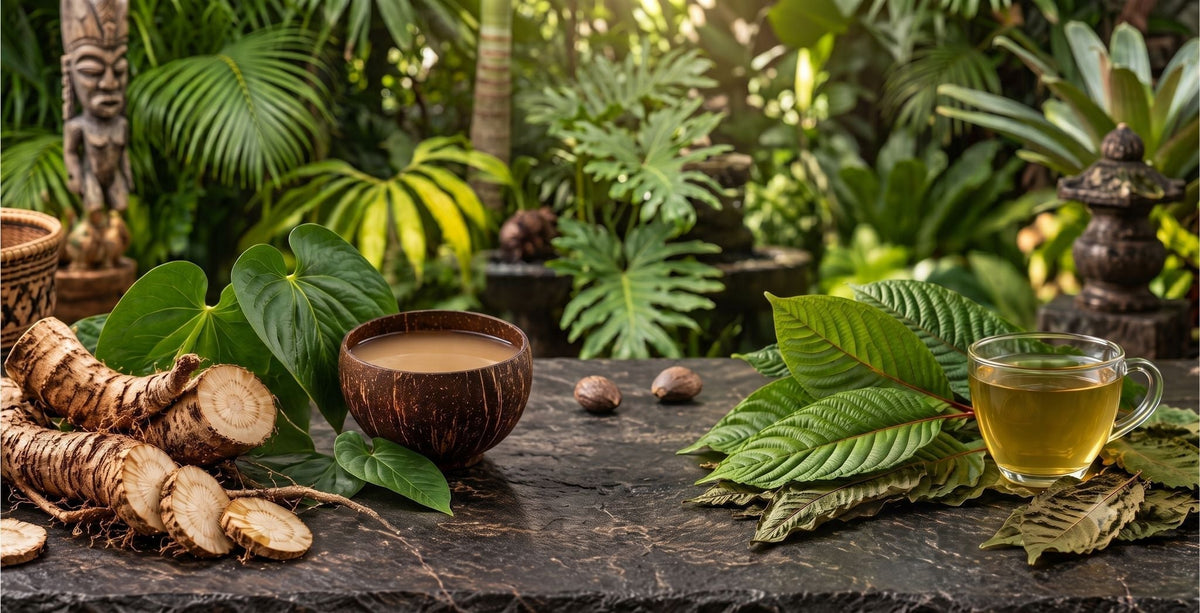
Kava vs Kratom: A Complete Guide to Effects, Benefits, and Risks
People looking for natural ways to manage daily stress, lift their mood, or unwind after a long day often stumble upon two traditional botanical remedies: kava and kratom. Both herbs have gained huge popularity in wellness circles, local kava bars, and online communities. Because both are plant-based drinks often used to relax, people frequently lump them together into the same category.
However, when you look closely at kava vs kratom, they are entirely different plants with distinct chemistry, separate body mechanisms, and very different safety profiles.
What Is Kava and How Does It Work?

Kava known scientifically as Piper methysticum, is a member of the pepper family native to the South Pacific islands, including Fiji, Vanuatu, and Hawaii. For centuries, Pacific Islanders have ground the root of the kava plant into a muddy, earthy beverage used in welcoming ceremonies, community gatherings, and conflict resolution rituals.
The active ingredients in kava are a group of compounds called kavalactones. Instead of forcing your body into sedation, kavalactones interact with neurotransmitters in your brain, mainly gamma-aminobutyric acid (GABA). GABA acts as your nervous system's natural brake pedal. By helping GABA bind more effectively to its receptors, kava slows down racing thoughts and softens physical tension.
The primary kava effects include:
-
Mental calm with preserved cognitive sharpness
-
Noticeable physical muscle relaxation
-
Gentle mood elevation and sociability
-
Relief from temporary, situational stress
Unlike alcohol, traditional kava does not induce mental confusion or slurred speech. When you drink genuine kava, your tongue and lips usually go temporarily numb.
Regarding safety, reputable traditional kava (specifically "noble" kava varieties prepared only from the roots) has a long history of safe use. Concerns arise mainly when people consume cheap extracts made from the stems or leaves of the plant, or when kava is mixed with alcohol and medications that stress the liver.
What Is Kratom and How Does It Work?

Kratom, known botanically as Mitragyna speciosa, is a tropical tree indigenous to Southeast Asian countries like Thailand, Indonesia, and Malaysia. For generations, manual laborers and farmers chewed fresh kratom leaves or brewed them into tea to fight fatigue, increase stamina in humid heat, and soothe aching muscles.
The plant contains dozens of alkaloids, but the two main active compounds are mitragynine and 7-hydroxymitragynine. These compounds interact with several systems in the brain, including adrenergic, dopamine, and notably, opioid receptors. This makes kratom biologically unique and gives it a biphasic nature: its effects change dramatically depending on the amount taken.
Typical kratom effects fall into two distinct categories:
-
Low to moderate amounts: Increased physical energy, heightened focus, social chattiness, and a mild motivational boost.
-
Higher amounts: Distinct physical discomfort relief, deep emotional sedation, and an intense calming sensation.
While many turn to kratom for daily discomfort or energy, it carries distinct concerns. Because its active alkaloids bind to opioid receptors, regular and repeated consumption can lead to physical tolerance, dependence, and uncomfortable withdrawal symptoms.
Kava vs. Kratom: What’s the Difference?
To understand the key kava vs. kratom differences, compare them across several important factors:
How Do Kava and Kratom Affect You?

The real-world experience of taking these two herbs can feel noticeably different.
Kava is generally associated with a calm and relaxed feeling. Kratom can produce different effects depending on the amount consumed, with some people reporting more stimulating effects at lower amounts and greater relaxation or drowsiness at higher amounts.
Because both substances can affect the nervous system and interact with other substances, individual responses can vary. More research is still needed to fully understand their long-term effects.
Which One Is Stronger: Kava or Kratom?
 Deciding which herb is stronger depends entirely on what you want to achieve and how your individual body responds.
If your goal is to silence a noisy, racing mind or ease into an evening without a hangover, kava is often the superior, more targeted option. It relaxes the nervous system without disrupting motor control or rational thinking.
If your goal is pain management, physical endurance, or potent mood alteration, kratom is pharmacologically much stronger. Its alkaloids bind tightly to major receptor sites in the central nervous system, creating a heavier physical and psychological impact. Treating one as universally stronger misses the point; they work on entirely different neural pathways.
Final Thoughts on Kava and Kratom
Both kava and kratom are plant-based, but they serve different purposes. Kava is mainly used for relaxation and unwinding, while kratom can have stimulating or relaxing effects but carries a greater risk of dependence. Consider your needs, potential risks, and speak with a healthcare professional before choosing either.
Frequently Asked Questions
Q1 What Is Healthier, Kava or Kratom?
From a dependence standpoint, pure noble kava is generally considered safer because it does not trigger physical addiction or target opioid receptors. Kratom presents higher risks regarding tolerance, dependence, and withdrawal.
Q2 Is Kava Similar to Xanax?
Both kava and prescription benzodiazepines like Xanax influence GABA activity in the brain. However, kava modulates receptors gently without the severe sedation, memory loss, or high addiction risks associated with prescription sedatives.
Q3 Does Kava Actually Get You Buzzed?
Kava does not cause an intoxicating buzz like alcohol or cannabis. Instead, it creates a subtle, grounded sense of relaxation, physical looseness, and cheerful contentment while leaving your thoughts completely clear.
Q4 Can You Take Kava and Kratom Together?
Mixing kava and kratom is not recommended. Combining them can cause severe nausea, extreme dizziness, elevated blood pressure, and unnecessary strain on your liver and nervous system.
Q5 How Long Do Kava and Kratom Effects Last?
Kava effects usually set in within twenty to thirty minutes and last between two to three hours. Kratom effects generally begin within twenty to forty minutes and typically last between three to five hours, depending on the dosage.
Read more

Built around a standardized concentration of 200 mg of mitragynine per bottle, this tincture is designed for adult consumers looking for transparent labeling, measurable serving sizes, and a clean ...
Busy daily routines often push people to seek simple, plant-based ways to support their wellness. Between demanding work schedules, family commitments, and personal fitness goals, taking time to me...
