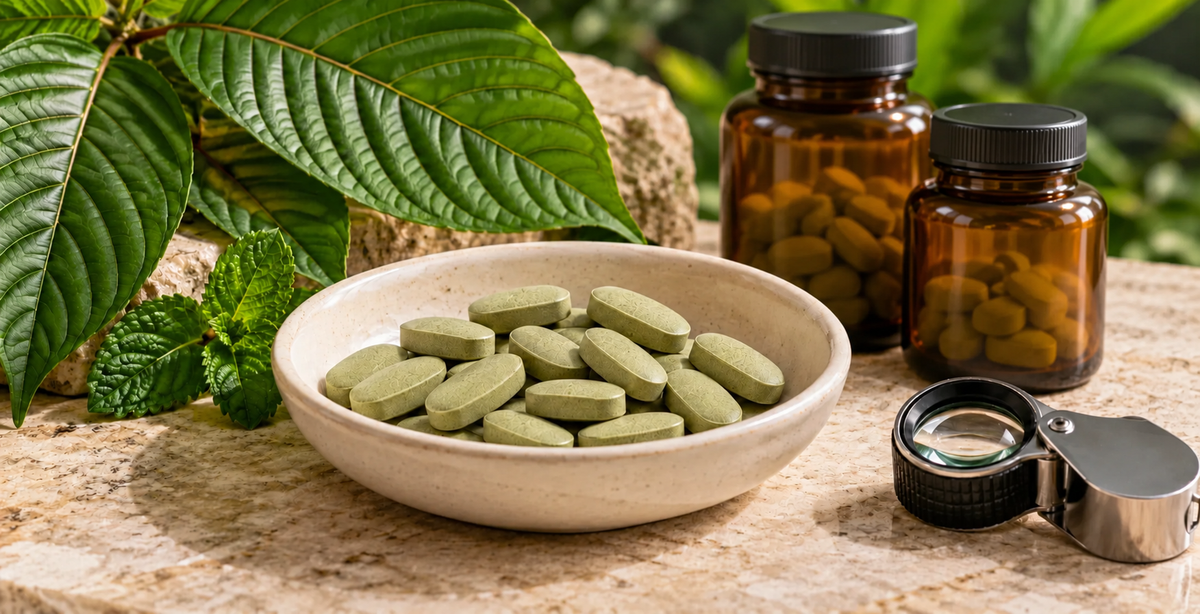
Kratom Chewable Tablets: Types, Ingredients, and Safety
Kratom has expanded rapidly across modern wellness markets, moving far beyond the crushed leaves and bitter teas historically used in Southeast Asia. Today, retail shelves and online storefronts feature a wide variety of manufactured formulations. Among the newer innovations are kratom chewable tablets. These products aim to offer a portable, pre-measured, and more palatable alternative to raw plant preparations.
What Are Kratom Chewable Tablets?
 Kratom chewable tablets are solid oral products designed to be broken down by chewing before swallowing. They are made by compressing powdered kratom leaf material or concentrated kratom extracts alongside various food-grade binders, flavoring agents, and texturisers.
The source botanical behind these tablets is Mitragyna speciosa, a tropical evergreen tree in the coffee family native to Southeast Asian nations such as Thailand, Malaysia, and Indonesia. For generations, local populations chewed fresh leaves or brewed dried leaves into tea to combat physical fatigue or soothe aches during demanding labor.
Chewable tablets differ significantly from conventional formats:
-
Raw Powder: Loose kratom powder has a naturally earthy, astringent, and bitter flavor that many people find difficult to swallow. It requires precise measurement using kitchen scales or spoons and leaves a messy residue.
-
Standard Capsules: Capsules eliminate the unpleasant taste by encasing loose powder inside gelatin or vegetable shells. However, they can be large, difficult to swallow in multiples, and must break down entirely in the stomach before release.
-
Liquid Extracts and Shots: Liquid formulations are fast-acting but frequently have an intense chemical or herbal aftertaste. They also present a higher risk of accidental overconsumption due to inconsistent sip measurements.
-
Chewable Tablets: These bridge the gap between taste-masking and measured dosing. They crumble smoothly in the mouth, release active compounds directly, and hide bitter alkaloid flavors using sweetening systems.
Manufacturers develop diverse formats primarily to meet consumer preferences for discretion, ease of use, and convenience. Chewables bypass the preparation time required for brewing teas and eliminate the need to carry loose powders or shaker cups.
What Types of Kratom Chewable Tablets Are Available?
 The commercial market offers several varieties of kratom chewable tablets, categorized by formulation type, target flavor,and advertised strength:
-
Full-Spectrum Extract Chewables: These tablets use concentrated plant extracts designed to maintain the natural ratio of the plant's various alkaloids while discarding inert plant fibers. They provide higher potency in smaller physical sizes.
-
Isolated Alkaloid Chewables: Some brands isolate specific compounds, particularly mitragynine, to create a targeted experience. These tablets contain very little whole-plant matter and focus strictly on refined chemical fractions.
-
Crushed Leaf Compressed Tablets: These products press whole micronized leaf powder directly into chewable wafers. They are less concentrated than extract-based tablets and contain the complete fiber matrix of the raw leaf.
-
Flavored Varieties: Because natural kratom compounds are intensely bitter, chewable tablets rely heavily on flavorings. Common options include citrus, mint, berry, fruit punch, and tropical flavors formulated to overpower alkaloid notes.
-
Varying Potency Levels: Tablets range widely in strength. Low-strength tablets may contain 10 to 15 milligrams of active mitragynine per piece, while high-potency extract tablets can carry 50 to 100 milligrams or more per serving.
-
Combination Tablets: Certain manufacturers blend kratom extracts with other botanical ingredients or amino acids, such as caffeine, L-theanine, or chamomile, targeting specific consumer moods or activities.
Product descriptions across the industry often rely on marketing phrases ,These phrases are promotional tools rather than standardized pharmaceutical metrics. Buyers must inspect published laboratory panels and exact milligram quantities rather than trusting marketing slogans.
What Ingredients Are Found in Kratom Chewable Tablets?
 A typical chewable tablet combines active botanical compounds with functional excipients to ensure tablet integrity, shelf life, and taste:
-
Mitragynine: This is the most abundant active alkaloid found in the kratom leaf. It acts on several central nervous system pathways, including opioid receptors, adrenergic receptors, and serotonin systems.
-
7-Hydroxymitragynine: Present in much smaller quantities in natural leaves, this potent alkaloid possesses a significantly higher binding affinity for mu-opioid receptors than mitragynine. It is primarily responsible for the analgesic and sedative properties attributed to kratom.
-
Secondary Alkaloids: Raw and full-spectrum extract chewables also contain trace alkaloids, such as speciociliatine, paynantheine, and speciogynine, which contribute to the overall botanical effect.
-
Sweeteners and Taste Modifiers: To counteract strong bitterness, formulations incorporate natural or artificial sweeteners, including sucralose, stevia, dextrose, xylitol, and monk fruit extract.
-
Binders and Fillers: Manufacturers use standard food-grade processing aids such as microcrystalline cellulose,dicalcium phosphate, and maltodextrin to hold the tablet together and provide chewable bulk.
Because kratom products lack mandatory pre-market approval in many jurisdictions, reading third-party testing panels is essential. Independent laboratory testing verifies that the tablet contains the stated alkaloid milligrams and confirms the absence of harmful contaminants, including heavy metals (such as lead and arsenic), residual extraction solvents,salmonella, and mold.
What Are the Potential Effects and Safety Risks?
 Kratom displays complex, dose-dependent pharmacological effects. At lower amounts, it tends to produce stimulating,alertness-promoting sensations. At higher amounts, it shifts toward sedative, pain-dampening, and calming effects.
Despite anecdotal claims, clinical scientific trials on human safety, therapeutic value, and long-term consequences remain limited. The primary health considerations include:
-
Mild to Moderate Adverse Effects: Frequent short-term side effects include nausea, stomach cramps, vomiting,dry mouth, dizziness, constipation, headaches, and drowsiness.
-
Risk of Dependence and Tolerance: Regular, frequent consumption can lead to physiological dependence. Over time, the body adapts to the presence of alkaloids, requiring larger amounts to achieve identical sensations.
-
Withdrawal Symptoms: Stopping kratom after consistent use can trigger classic withdrawal symptoms, including muscle aches, severe restlessness, insomnia, runny nose, sweating, irritability, anxiety, and digestive distress.
-
Severe Health Complications: High doses or prolonged use have been associated with liver toxicity, seizures,heart palpitations, dangerously high blood pressure, and respiratory depression, particularly when high-potency extracts are consumed.
-
Drug Interactions: Kratom alkaloids inhibit critical liver enzymes responsible for processing many medications (such as the CYP450 enzyme family). Mixing kratom with prescription drugs, alcohol, benzodiazepines, or over-the-counter medications can cause dangerous drug accumulation in the bloodstream.
-
Lack of Approved Medical Utility: Regulatory bodies like the US Food and Drug Administration (FDA) have not approved kratom as a safe or effective treatment for any medical condition, including pain, anxiety, depression, or opioid withdrawal.
How to Evaluate Kratom Chewable Tablets Before Buying
 Navigating the market requires careful inspection to avoid adulterated or mislabeled goods:
-
Examine the Certificate of Analysis (COA): Look for batch-specific laboratory reports conducted by an accredited third-party facility. A legitimate COA lists the precise concentrations of mitragynine and 7-hydroxymitragynine while confirming clean results for microbiological contaminants, pesticides, and heavy metals.
-
Review Detailed Ingredient Lists: Check the entire label to identify every inactive additive, sweetener, and preservative. This is particularly important for individuals with food allergies, sensitivity to sugar substitutes, or dietary restrictions.
-
Disregard Potency Hype: Do not assume a product marked "extra potent" is higher quality. Highly concentrated extracts often present a much steeper risk of side effects, rapid tolerance development, and accidental overconsumption compared to mild formulas.
-
Check Local and State Laws: Kratom legality is fragmented. While legal in some regions, it is strictly banned or controlled in multiple states, counties, and cities worldwide. Confirm local statutes before purchasing or possessing these products.
-
Seek Medical Guidance: Discuss kratom with a qualified healthcare provider, especially if you have underlying liver, kidney, or cardiovascular issues, or if you take daily prescription medications.
Conclusion
Kratom chewable tablets offer convenience but still carry risks, including dependence, withdrawal, and drug interactions. Check independent lab reports and ingredient labels, follow local laws, and consult a healthcare professional before use.