


What Is Mitragynine? Uses, Effects, Safety, and Key Facts
What Is Mitragynine and Where Does It Come From?

Mitragynine is not another name for kratom. It is one of the plant’s many natural compounds and is generally the most abundant alkaloid found in its leaves. Kratom also contains smaller amounts of other alkaloids, including speciogynine, paynantheine, and speciociliatine.
The amount of mitragynine in kratom can vary depending on several factors:
- The plant’s geographic origin and growing conditions
- The age of the leaves and timing of harvest
- Drying, curing, and fermentation methods
- Extraction and manufacturing processes
- Storage conditions and exposure to heat, moisture, or light
Traditionally, kratom leaves have been chewed or brewed as tea in parts of Southeast Asia. Today, they are available in various formats, including powders, capsules, standardized extracts, tinctures, and concentrated liquid shots.
How Does Mitragynine Work in the Body?

To understand how mitragynine functions inside the human body, one must first look at cellular receptors. Receptors are specialized protein structures embedded on the surfaces of cells that receive chemical messages from internal compounds, like neurotransmitters, or external compounds, like plant alkaloids.
Mitragynine demonstrates a complex pharmacological profile that engages multiple biological pathways:
-
Opioid Receptor Binding: Mitragynine interacts with human opioid receptors, primarily serving as a partial agonist at the mu-opioid receptor. Unlike conventional prescription opioids, which are typically full agonists that trigger extensive recruitment of the beta-arrestin-2 pathway linked to acute respiratory arrest, mitragynine displays biased signaling.
-
Other Neurotransmitter Pathways: Research suggests that mitragynine also displays measurable affinity for alpha-2 adrenergic receptors, adenosine receptors, and serotonin (5-HT2C and 5-HT7) receptors, contributing to its mixed stimulant-like and sedative-like profile.
-
Gastrointestinal and Hepatic Processing: After oral ingestion, mitragynine is absorbed via the gastrointestinal tract and enters the bloodstream, where it travels to the liver.
This metabolic conversion represents an essential pharmacological distinction:
-
Mitragynine: The most abundant major alkaloid naturally found in raw kratom leaves, exhibiting a broad, multi-receptor pharmacological profile.
-
7-Hydroxymitragynine: A structurally related compound present in raw leaves in trace quantities (often less than 0.05 percent of total leaf weight), but recognized as a significantly more potent mu-opioid receptor agonist formed both naturally in aged leaf matter and internally through liver metabolism.
Because of this intricate metabolic sequence, individual physiological responses vary substantially. Human responses depend on unique metabolic rates, genetic enzyme variations, baseline health status, history of substance use, concurrent medication intake, and the specific purity and alkaloid balance of the consumed product.
How Is Mitragynine Used and What Effects Are Reported?

Mitragynine has no FDA-approved therapeutic use. However, some consumers use kratom products for alertness, relaxation, mood changes, social ease, or physical discomfort. Others report using them to manage opioid withdrawal symptoms, but kratom is not an approved or medically supervised withdrawal treatment.
Reported effects may include:
- Increased energy and alertness
- Changes in mood
- Relaxation or drowsiness
- Nausea and dizziness
- Constipation
- Changes in heart rate or blood pressure
Lower amounts are often associated with stimulating effects, while higher amounts may feel more sedating. However, responses vary based on product strength, frequency of use, tolerance, metabolism, and individual health. These reports should not be treated as reliable dosing guidance or proven medical benefits.
How Is Mitragynine Evaluated in Kratom Products?

Specialized laboratories use methods such as HPLC and LC-MS to measure mitragynine levels and screen products for contaminants. The results are documented in a Certificate of Analysis (COA). Product labels may report mitragynine in milligrams per serving, milligrams per container, percentage by weight, or as part of the total alkaloid content.
Before purchasing a product, consumers should:
- Confirm that the COA matches the batch number on the package.
- Review the mitragynine concentration, serving size, ingredients, and warnings.
- Check for testing covering heavy metals, harmful microbes, and residual solvents.
- Be especially careful with concentrated extracts, which contain more alkaloids than raw leaf products.
Raw leaf, standardized extracts, preparations, and isolated 7-hydroxymitragynine products can differ significantly in concentration and composition. A higher mitragynine percentage alone does not guarantee quality or safety. Reliable products also require accurate labeling, clean manufacturing, proper testing, and responsible-use guidance.
Conclusion
Frequently Asked Questions
Q1 What are the effects of mitragynine?
Reported effects may include increased energy, focus, or relaxation. Possible side effects include nausea, dizziness, constipation, headaches, and tiredness.
Q2 How is mitragynine used?
It is consumed through kratom tea, powders, capsules, liquid shots, and standardized extracts. Mitragynine is not FDA-approved to treat any medical condition.
Q3 How does mitragynine work in the body?
Mitragynine interacts with several receptor systems, including mu-opioid receptors. The liver also converts a small amount into 7-hydroxymitragynine.
Q4 How are mitragynine and 7-hydroxymitragynine different?
Mitragynine is kratom’s most abundant alkaloid, while 7-hydroxymitragynine occurs naturally in much smaller amounts and has stronger activity at mu-opioid receptors.
Q5 What are the risks and side effects of mitragynine?
Potential risks include nausea, dizziness, constipation, tolerance, dependence, and withdrawal. Serious reactions and drug interactions may occur, especially when combined with alcohol, sedatives, or certain medications.
Read more
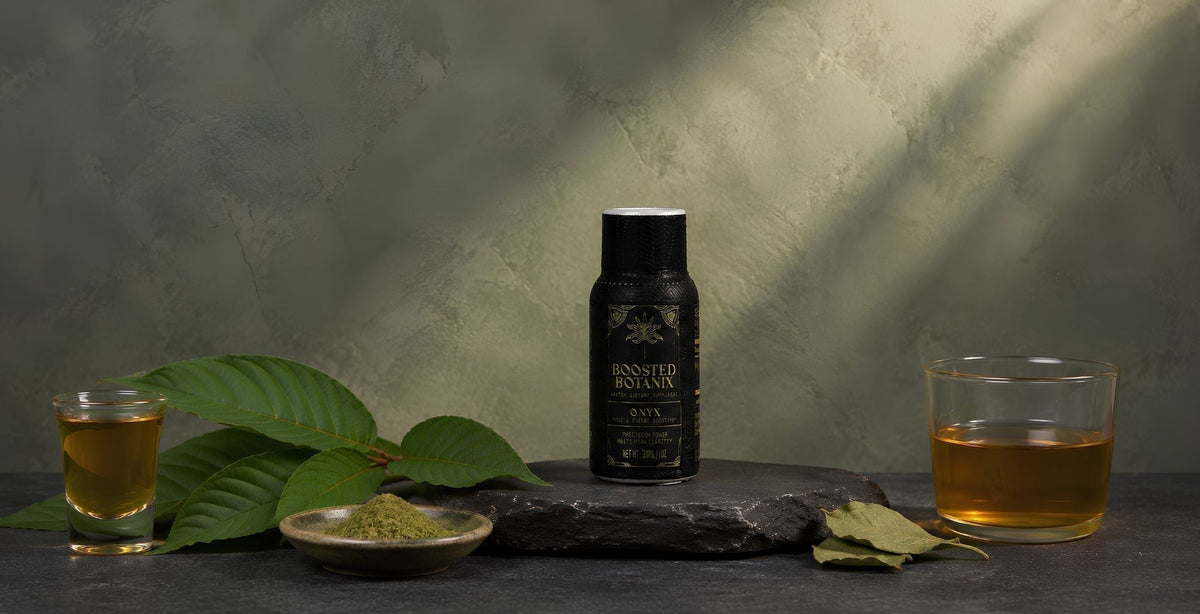
Finding reliable information on modern botanical extracts can sometimes feel overwhelming. Onyx Liquid by Boosted Botanix is a concentrated 30 ml liquid botanical supplement designed for adult cons...

Built around a standardized concentration of 200 mg of mitragynine per bottle, this tincture is designed for adult consumers looking for transparent labeling, measurable serving sizes, and a clean ...
